Learn a language
a few seconds at a time.
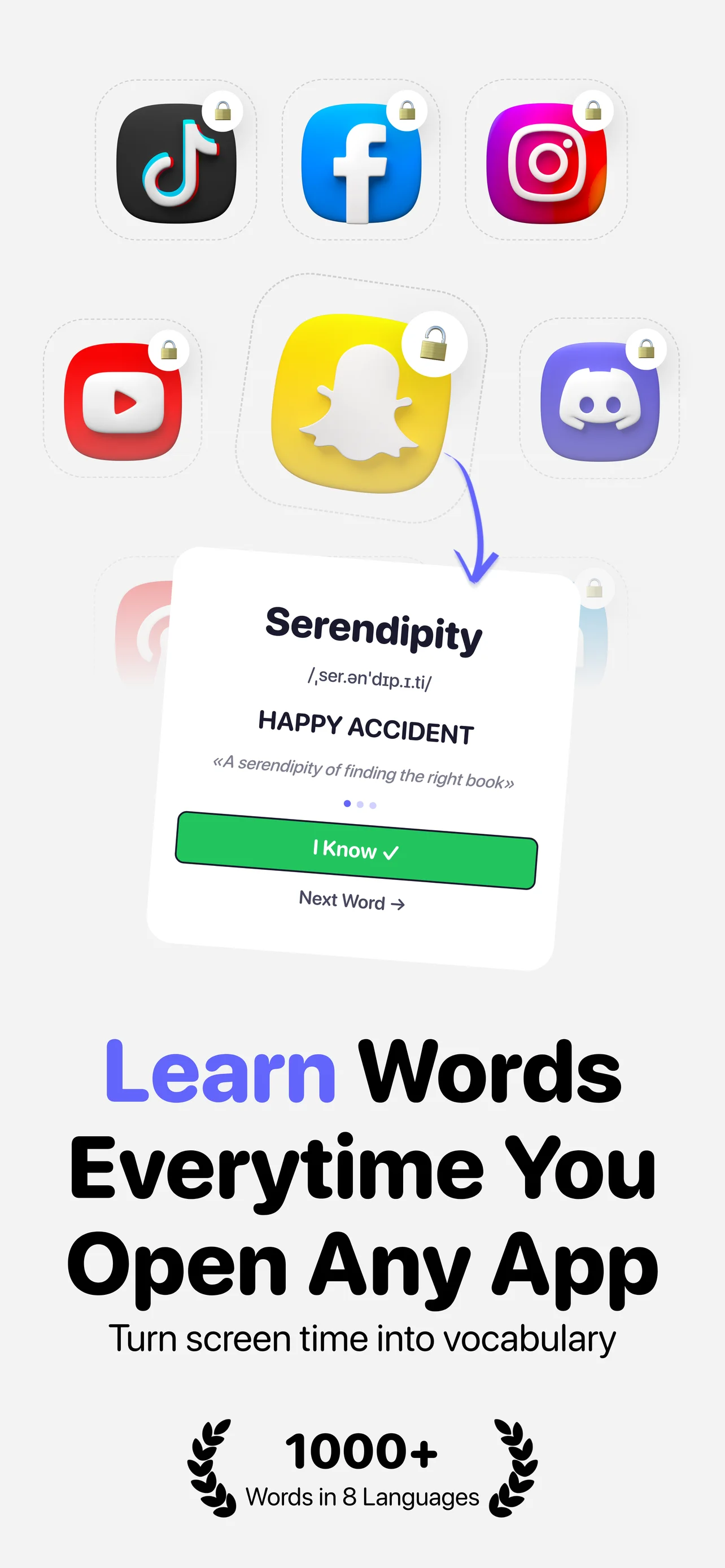
Microlearning means studying in short, focused bursts instead of long sessions. For vocabulary it works because memory rewards frequency — a word reviewed for five seconds, many times a day, sticks better than one long cram. LearnScreen delivers those bursts automatically, showing a flashcard the moment you open a distracting app.
Free to start · No account · 100% offline
What is microlearning?
Microlearning is breaking a subject into the smallest useful pieces and reviewing them one at a time — typically in bursts of a few seconds to a couple of minutes. Instead of a 30-minute lesson, you get a single flashcard; instead of a chapter, one phrase. The unit is small enough to finish in the gap between two other things.
For languages, the natural micro-unit is a word or a short phrase paired with its translation. That is small enough to review at a red light, in a lift, or in the second before a feed loads — and small enough that you never have to “find time” for it.
The catch has always been the trigger: micro-units are easy to review but easy to forget to review. The most effective microlearning attaches each burst to something you already do many times a day. For most people, that is picking up their phone.
Why short bursts beat long sessions
Microlearning isn’t a productivity fad — it lines up with three of the most durable findings in memory research:
- The forgetting curve. In 1885, Hermann Ebbinghaus mapped how quickly we lose new information: a large share fades within days unless we revisit it. Frequent, spaced touches flatten that curve.
- The spacing effect. One of the most replicated results in learning science: reviews spread out over time produce far stronger long-term recall than the same minutes packed into one block. Microlearning is spacing by default.
- Retrieval practice. Actively recalling an answer strengthens memory more than passively rereading it (Roediger & Karpicke, 2006). A flashcard you have to answer is retrieval; a page you skim is not.
Put together, they point to the same recipe: many small, spaced attempts to recall. That is exactly what a stream of few-second flashcards across your day produces — and exactly what a single evening study session, easily skipped, does not.
How many of those small attempts does a single word actually need? See how many times you need to see a word to remember it — roughly 8–12 encounters when you meet it while reading, fewer when you’re recalling it.
How LearnScreen makes
microlearning automatic
You don’t schedule the bursts. LearnScreen attaches each one to a habit you already repeat dozens of times a day — reaching for a distracting app.
Pick your trigger apps
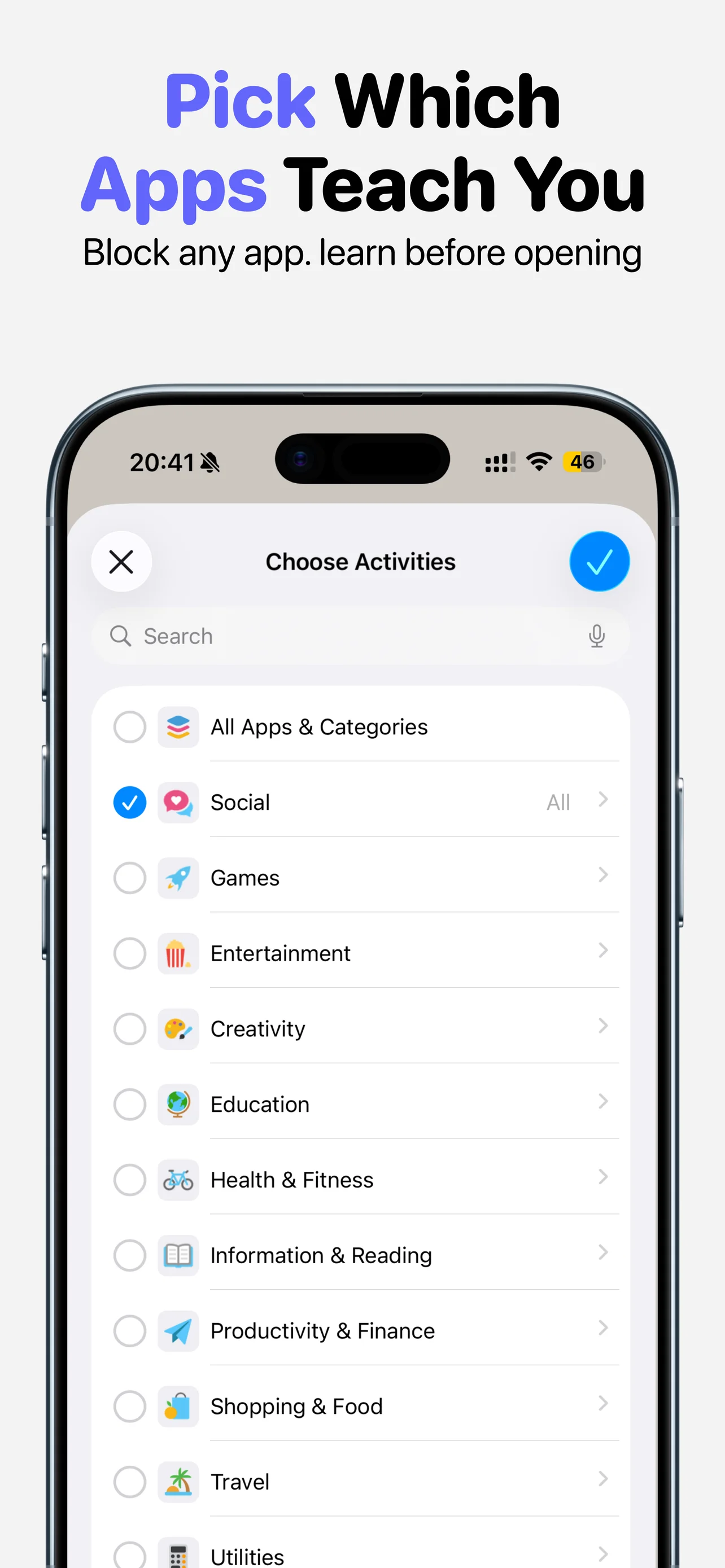
Choose the apps that pull you in — Instagram, TikTok, X, games. LearnScreen shields them at the OS level using Apple’s Screen Time API, so there’s nothing to bypass.
Get a micro-review
Open a shielded app and a single vocabulary card appears first. A few seconds of active recall — the exact micro-unit the science calls for — with no lesson to launch.
Answer and move on
Tap “I know” and the app unlocks for a short window. A Leitner spaced-repetition schedule decides which word returns next, and when — so spacing happens for you.
Microlearning vs. the
sit-down study session
Same goal, opposite ergonomics. The difference is almost entirely about whether the practice depends on your willpower.
| Microlearning (LearnScreen) |
Sit-down study session |
|
|---|---|---|
| Length per review | A few seconds per card | 15–60 minutes at once |
| What starts it | Automatic — opening a shielded app | You have to remember and choose to begin |
| Frequency | Dozens of micro-reviews a day | Once a day at best — often skipped |
| Willpower needed | None — it’s already in your path | High — starting is the hard part |
| Memory model | Spaced retrieval across the day | Massed practice — faster forgetting |
| Fits into | Phone habits you already have | A free block you have to find |
Prefer the classic flashcard workflow? See how LearnScreen compares as a passive Anki alternative.
Learning without
the effort of learning
No block of time to find
Micro-reviews live in gaps you already have — the second before a feed loads, the wait in a queue. Nothing new goes on your calendar.
Spacing handled for you
A Leitner spaced-repetition schedule surfaces each word right before you’d forget it — the spacing effect, applied automatically across your day.
No streak to protect
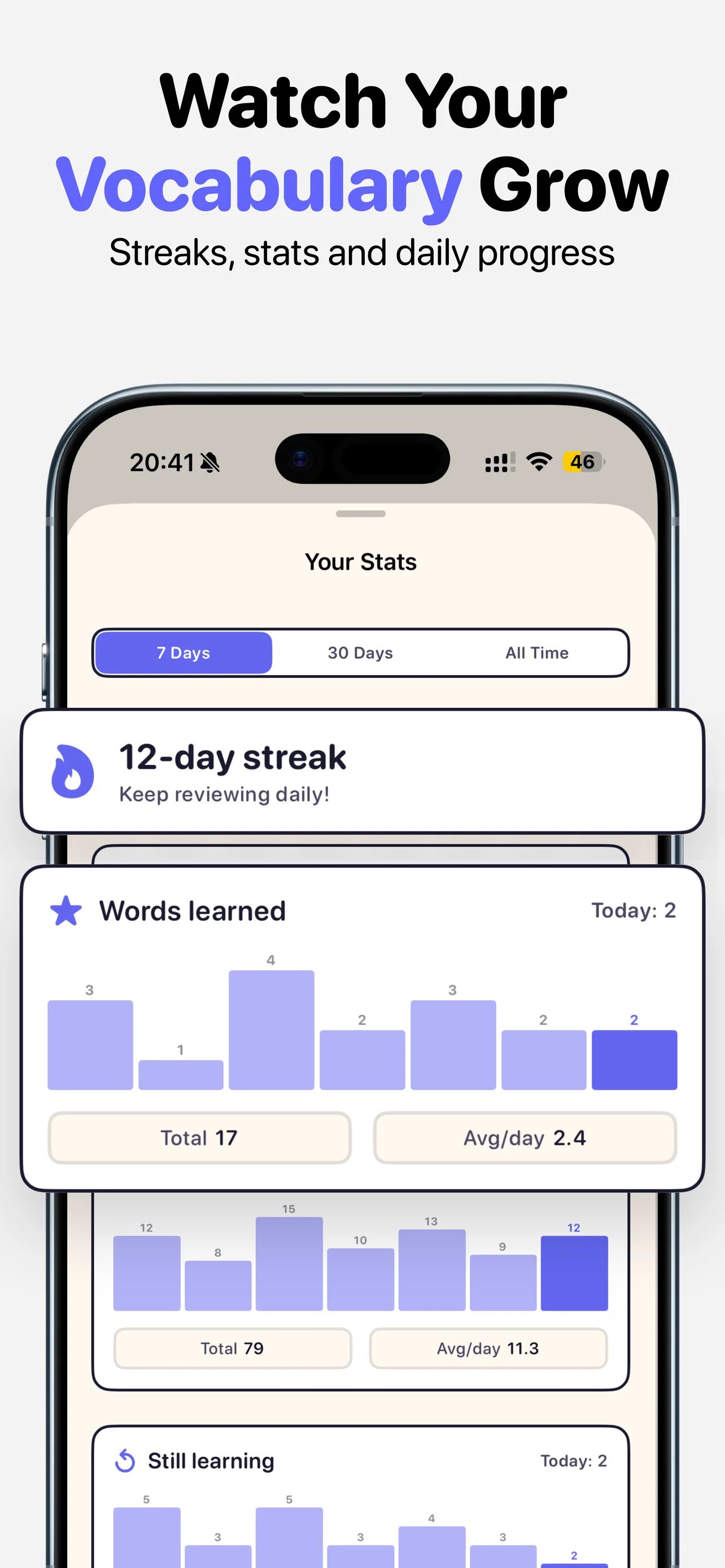
Because the practice is triggered by a habit, not a reminder, there’s no daily streak to guilt you into keeping. Miss a day and the reviews simply resume.
Real material, not filler
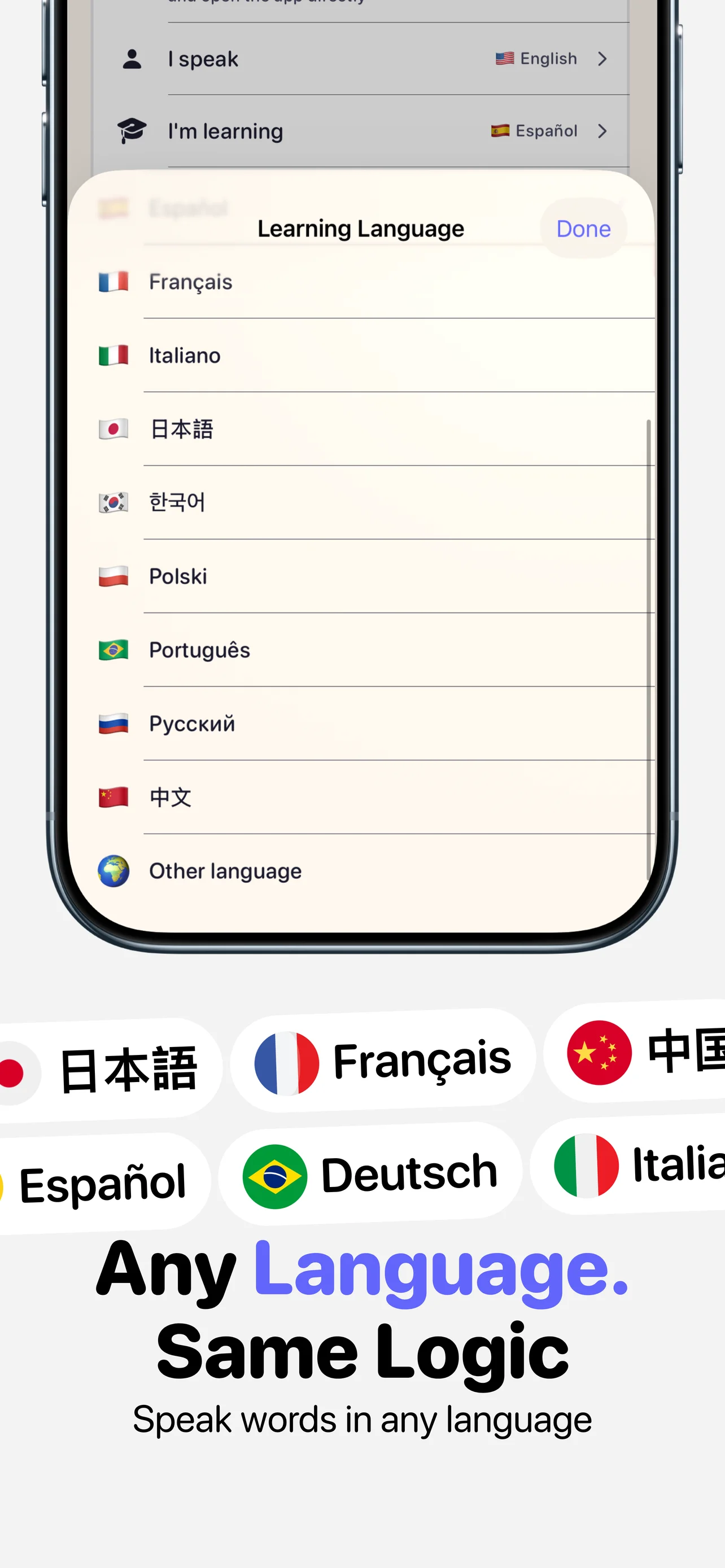
1,080+ curated words across 18 topics in 11 languages — plus any custom words you add with translation, transcription and an example sentence.
Who microlearning suits
- People with no free hour who can never commit to a set-aside study session but pick up their phone constantly.
- Restarters who’ve begun on a lesson app several times and lost the streak — microlearning has nothing to keep alive.
- Heavy scrollers who’d like their daily screen time to compound into vocabulary instead of vanishing.
- Polyglots juggling more than one language — directories are language-aware, so you can switch the active target.
- Spaced-repetition fans who love the method but never open the deck — here the deck opens itself.