Learn a language
without studying.
No lessons to open. No streak to protect. LearnScreen turns the apps you already reach for into effortless vocabulary practice — so learning happens in the background of your day.
Free to try · No account · 100% offline
What is passive learning?
Passive learning is picking up knowledge without setting aside dedicated study time. Instead of scheduling a lesson, you absorb small pieces in the gaps of your normal day — the moments that would otherwise disappear into a scroll.
It works because memory rewards frequency over duration. Seeing a word for five seconds, ten times across a day, builds stronger recall than staring at a list for an hour once. The hard part has always been the trigger: remembering to review. Passive learning solves that by attaching the review to a habit you already have.
For most people, the most reliable habit on the planet is reaching for their phone. LearnScreen puts a flashcard exactly there.
How well does exposure on its own actually do, and which part of “effortless” can honestly be automated? The studies, with numbers: does passive learning actually work?
Learning that comes to you
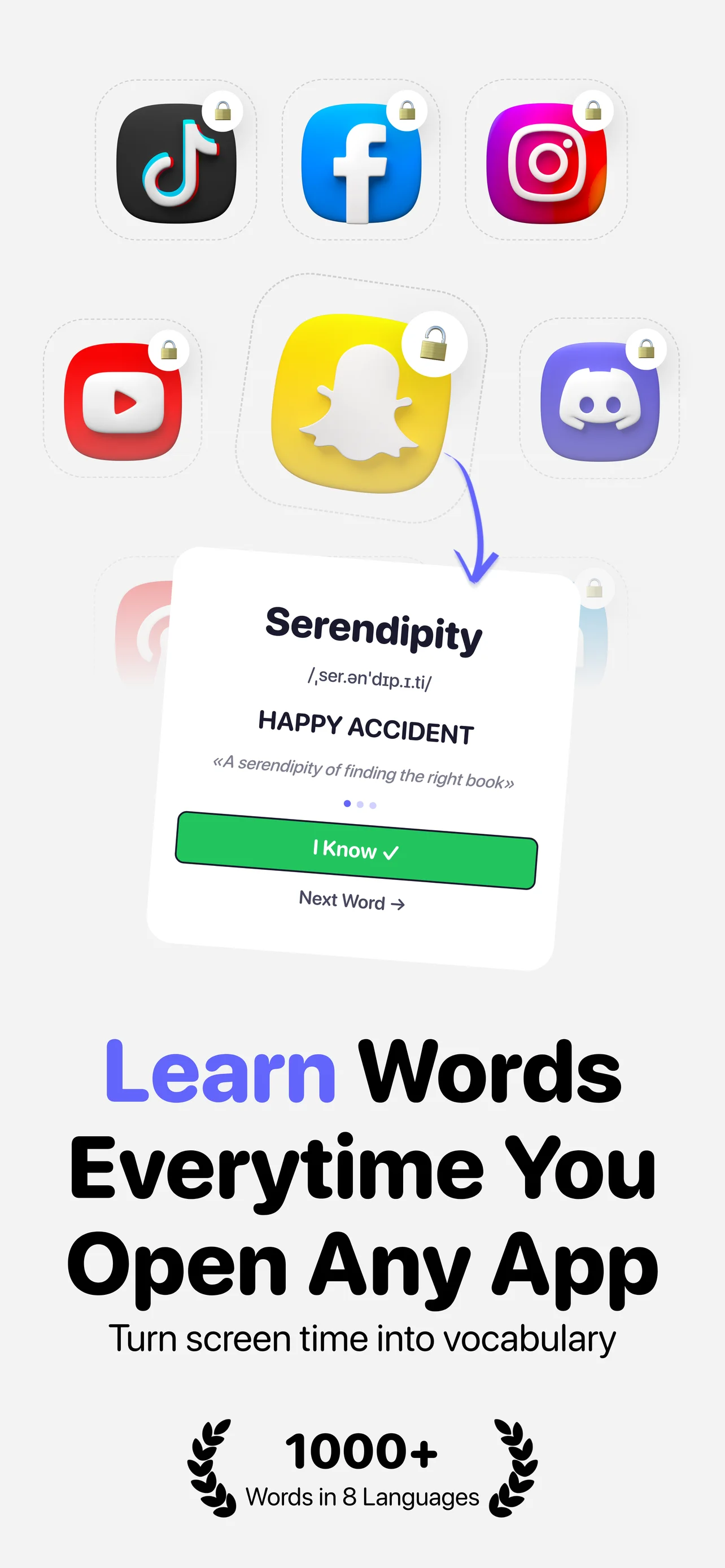
You don't open LearnScreen to study. It appears the moment you reach for a distraction — and steps out of the way the second you're done.
Pick your distractions
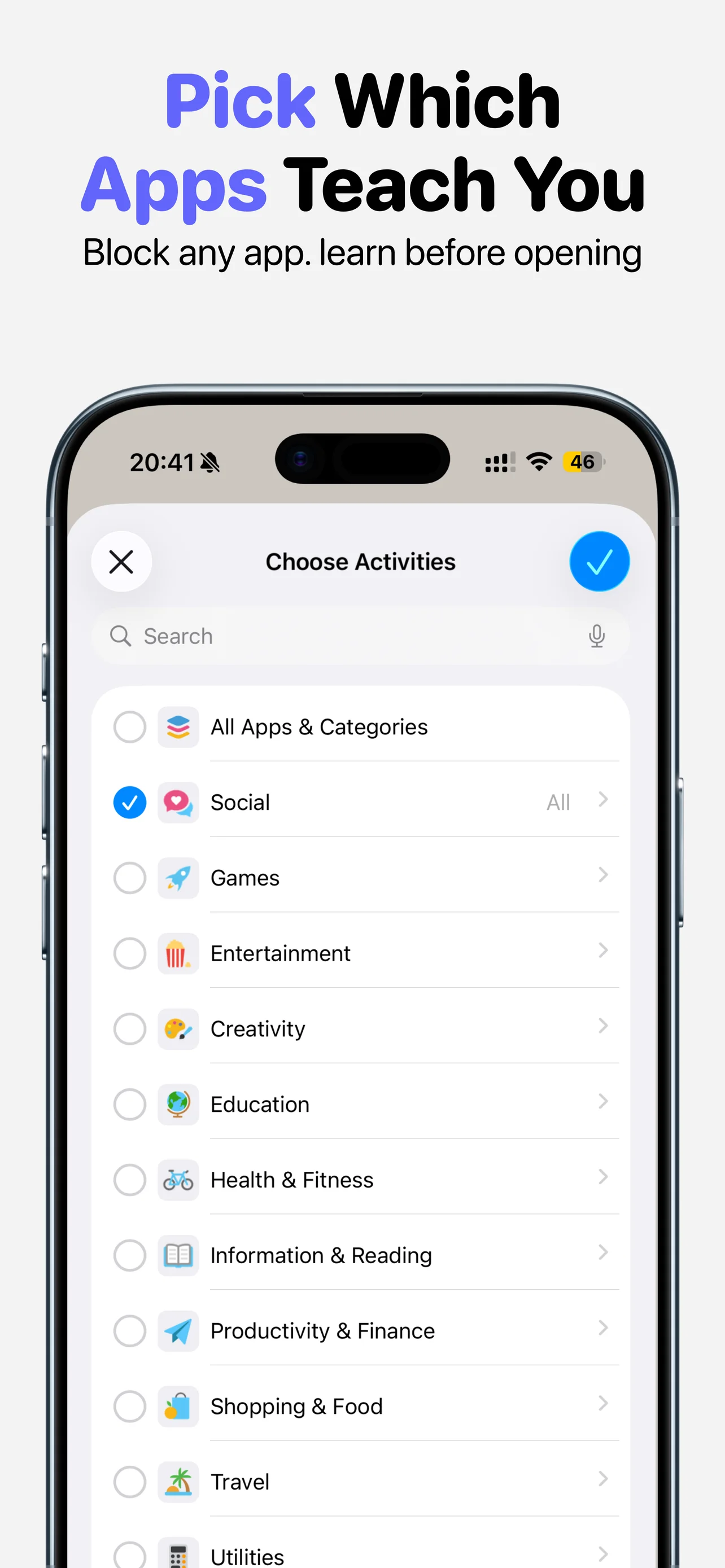
Choose the apps that pull you in — Instagram, TikTok, X, games. LearnScreen shields them using Apple's Screen Time API.
A flashcard appears
Next time you open a blocked app, a vocabulary card greets you instead. Five seconds of learning, no app to launch.
Review and carry on
Answer a few cards and the app unlocks automatically. The words compound in the background; you barely notice the effort.
Why passive beats
set-aside study
Zero willpower required
The hardest part of any study habit is starting. Passive learning removes the decision entirely — the review is already in your path.
Frequency that sticks
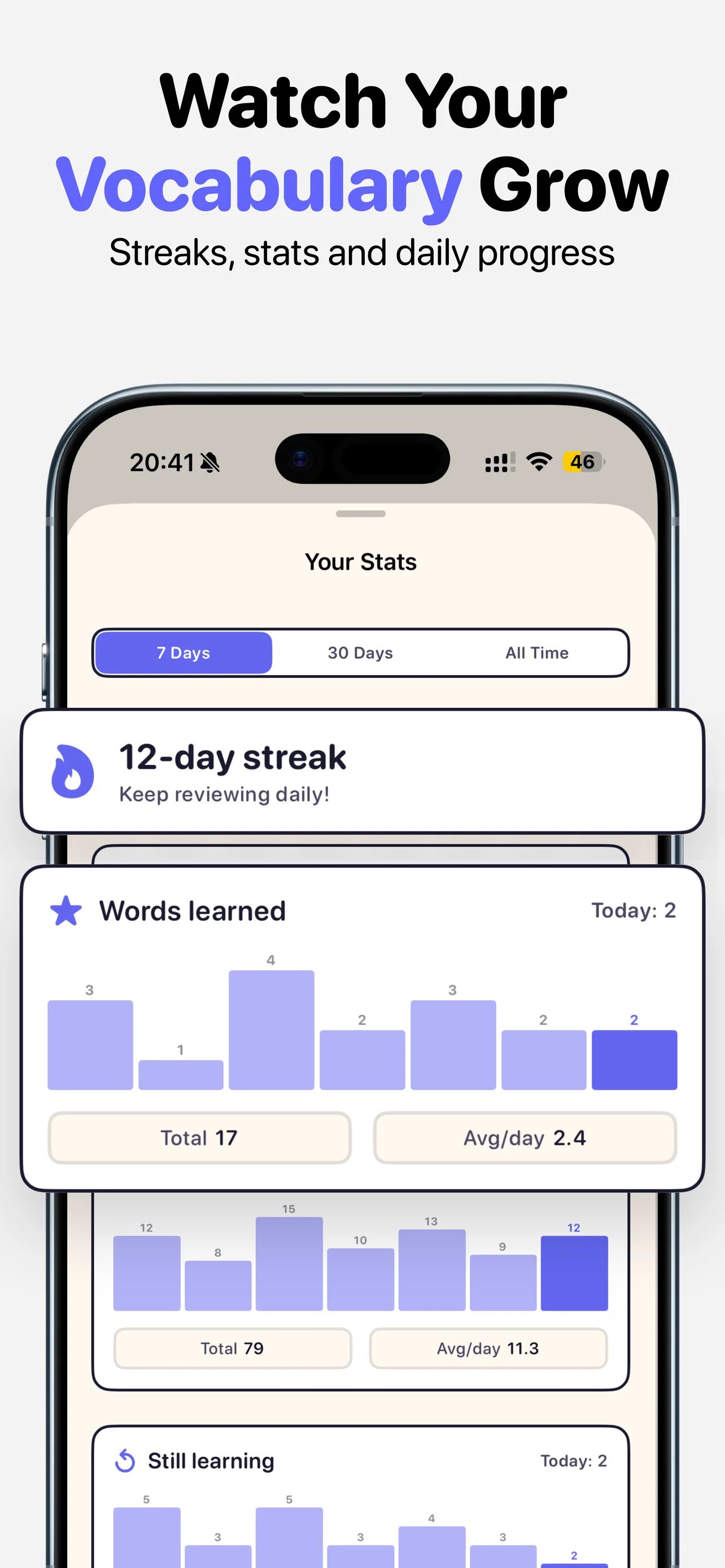
Spaced repetition (the Leitner system) surfaces words right before you'd forget them — spread across dozens of daily pickups, not one cram session.
Wasted time, reclaimed
The two hours a day that vanish into feeds become vocabulary practice. Same phone habit — a very different outcome.
11 languages, 1,080+ words
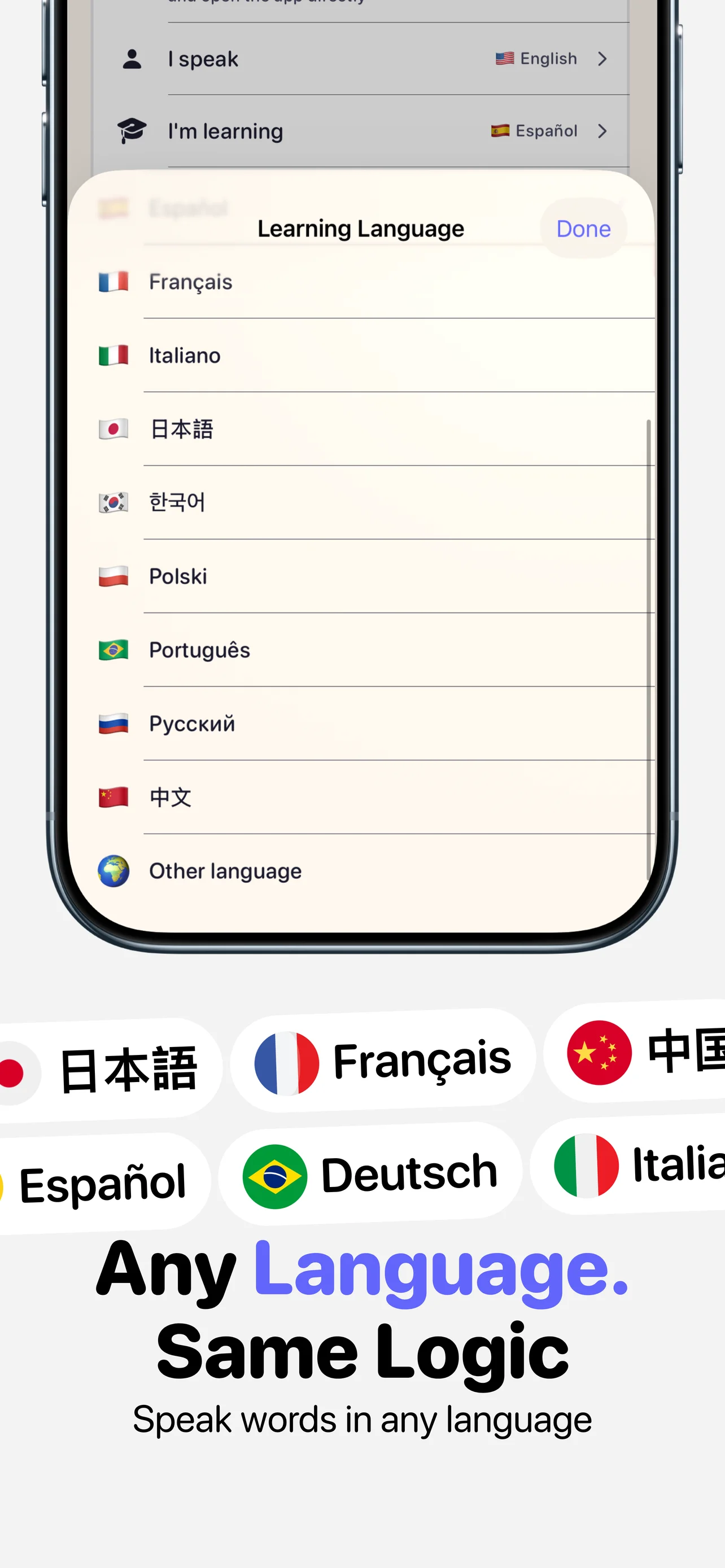
Curated vocabulary across 18 topics in English, German, Spanish, French, Italian, Japanese, Korean, Polish, Portuguese, Russian and Chinese — plus your own custom words.
Who passive learning is for
- Busy people who never find a free hour to sit and study a language.
- Heavy phone users who want their 2+ hours of daily screen time to compound into something.
- Language learners who start strong on lesson apps but lose the daily streak.
- Polyglots tracking more than one language — directories are language-aware.
- Anki users who love spaced repetition but never open the app — see the passive Anki alternative.